Ask a centre manager why good teachers leave and the answer is rarely money. It is the Sunday evening with a stack of two hundred answer sheets.
Marking is two different jobs wearing one name. One is judgement: is this argument sound, does this student understand the method or did they memorise the shape of it. That is the job you hired a teacher for. The other is transcription: reading bubbles, adding columns, copying numbers into a spreadsheet. That is the job that costs you the teacher.
ECMS is built to remove the second one entirely.
The exam already exists. It is just on paper.
No teacher arrives with a tidy question bank. They arrive with twenty years of exams as Word files, PDFs and photocopies in a drawer.
Photograph the paper or upload the file, and the system reads it into structured questions - the stem, the options, the answer key, the explanation. From that point the question is reusable: tag it to a curriculum standard, drop it into a new paper, reuse it next term without retyping a word.
The first import of a centre's archive is the moment the platform starts paying for itself, and it takes an afternoon, not a project.
Two hundred answer sheets, one phone
Answer sheets are graded from a photograph. The system straightens the page, reads the marks, and writes the score back against the right student and the right exam - not into a spreadsheet someone then has to type into the system.
That last clause is the whole point. Most "time-saving" tools save the marking and hand you back a CSV, which is the same evening moved sideways. Here the grade lands in the student's record, the class average updates, and the parent notification goes out without anyone opening a file.
Essays: AI drafts, the teacher decides
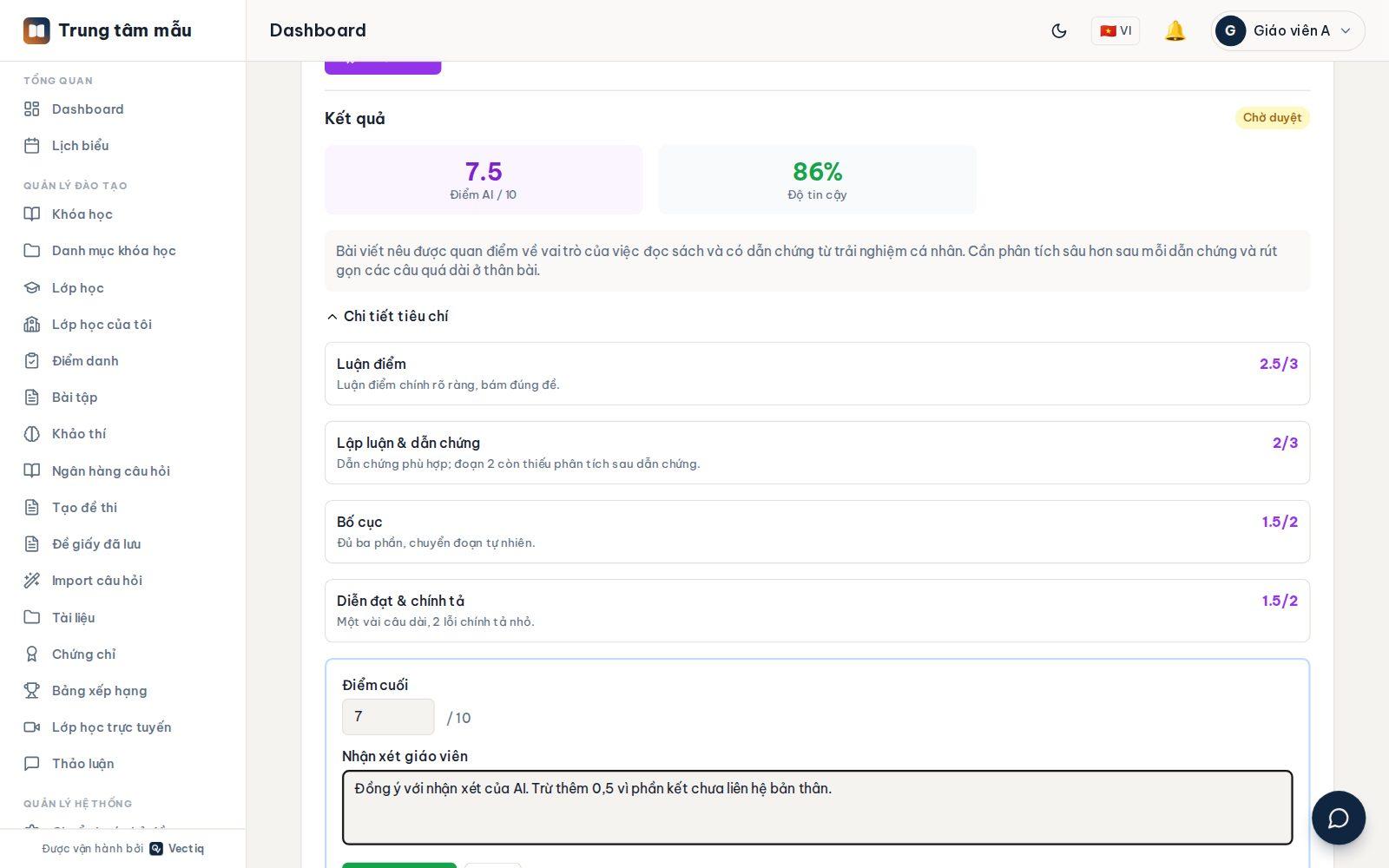
Essay marking is judgement, so we did not automate it. We automated the blank page.
The AI produces a draft mark with the reasoning laid out against the rubric. The teacher reads it, corrects what is wrong, and approves. Reviewing a draft is a fraction of the work of writing one from nothing, and the final mark is still the teacher's - which matters both pedagogically and for the parent who wants to argue about it.
Plagiarism detection runs across submissions in the same class, so the conversation about copied homework starts from evidence rather than suspicion.
We do not let AI issue a final grade unreviewed, and we do not hide that a draft was machine-generated. A centre's reputation rests on its marks being defensible; a system that quietly grades for you is a liability the first time a parent asks how the score was reached.
What a centre actually gets back
Not "efficiency" in the abstract. Specific hours, in the specific places they were being lost:
- The archive of past exams becomes a searchable question bank instead of a drawer.
- Multiple-choice marking stops being an evening and becomes a photograph.
- Essay marking starts from a draft instead of a blank page.
- Nobody retypes a score from one system into another, because there is one system.
Teachers stay for classes they enjoy teaching. They leave over the paperwork around them. That is a solvable problem, and it is largely a software problem.