A parent calls the centre in week ten, upset. Their child is failing. Why did nobody say anything?
Somebody did, probably. It went into a group chat with four hundred messages, between a photo of a birthday cake and a reminder about uniforms. Nobody can search it, nobody can prove it was sent, and the parent is right to be angry anyway - because being told is not the same as being able to find out.
The group chat is the problem, not the channel
Zalo is where Vietnamese parents already are, and there is no point fighting that. What fails is using a broadcast channel to carry information that is specific to one child.
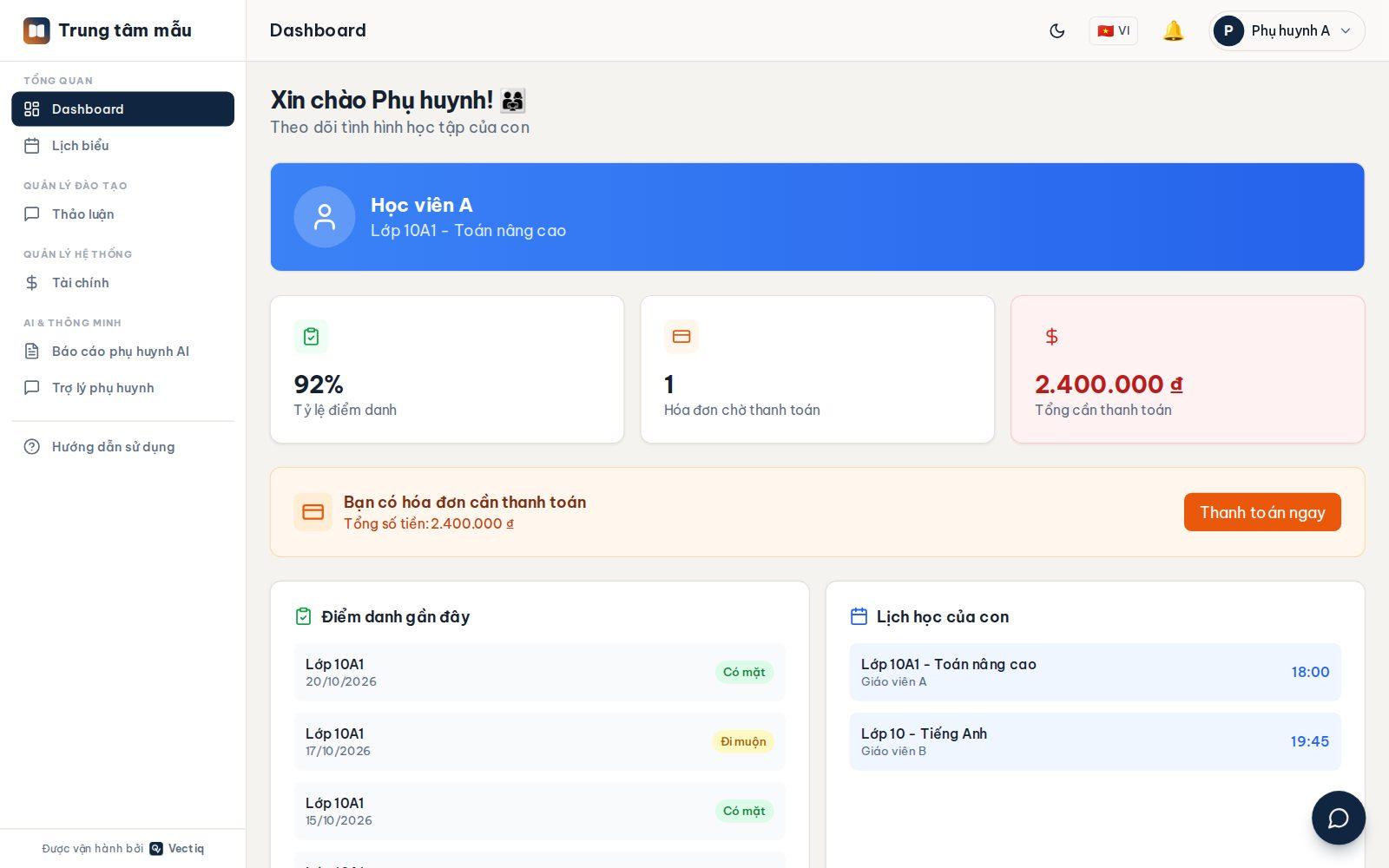
In ECMS a parent is a real user with a defined relationship to specific students. They open the app and see their child: attendance this month, marks from the last three assessments, which topics are solid and which are slipping, the tuition balance and when it is due. Zalo ZNS carries the notification; the record lives somewhere it can be looked up six weeks later.
The volume of questions a centre fields drops for a boring reason: most questions were requests for information that already existed.
Early warning is the feature that saves the enrolment
A student who drops out rarely does it suddenly. The pattern is three missed sessions, a falling mark, then a quiet non-renewal.
The system watches attendance, assessment results and practice activity together, and flags the student to the manager while there is still a term to save. Not a red dashboard nobody opens - a specific student, a specific reason, in time to phone the parent.
This is also the honest business case for the AI layer. A retained student is worth an entire term of fees; a churned one is worth a refund conversation and an empty seat.
A parent portal is a system holding children's academic records, so the privacy controls are not decoration: consent tracking, per-field control over what a parent can see, data export and deletion on request, and a retention policy per organisation. A centre that cannot answer "who can see my child's marks" will eventually be asked by someone who is not asking casually.
What changes in a term
- Parents stop asking questions whose answers are already on their screen.
- A student in trouble becomes a phone call in week four, not a complaint in week ten.
- Tuition notices arrive with a payment code attached, so the reminder and the payment are one step.
- The centre can show, not claim, that a parent was informed - with a timestamp.
None of this makes teaching better. It makes the centre trustworthy, which is what parents are actually buying.