A dairy operation notices output is down roughly eight percent over three weeks. The herd count has not changed. Feed deliveries look normal. Nobody can say what happened.
This is the ordinary shape of the problem, and it is not solved by a better dashboard. It is solved by having recorded the right thing in the first place.
The unit of record is the animal, not the herd
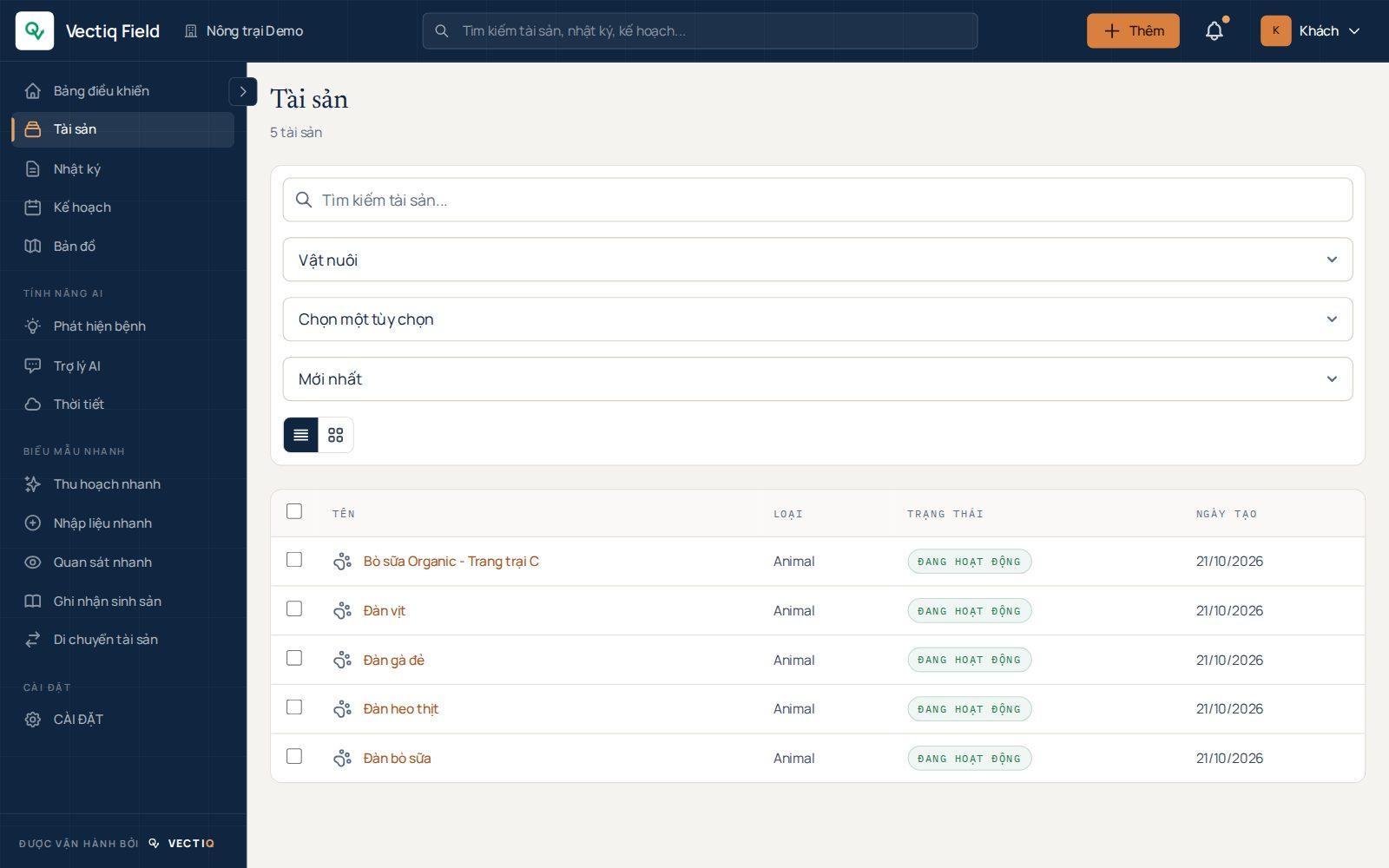
In Vectiq Field every animal carries an ID tag, and the tag is the key everything else hangs off: weight checks, treatments and their withdrawal periods, movements between grazing blocks, and yield.
That turns the eight percent into a query. Which animals dropped, when, and what else is true of those animals on those dates - were they moved to block four the week before, were three of them treated and still inside a withdrawal period, did the weight checks already show it a fortnight earlier.
None of that requires AI. It requires that the movement, the treatment and the yield were written against the same identity.
Grazing blocks have to be real shapes
Rotation planning only means something if a block is the actual geometry of the field. Boundaries import from KML and PostGIS handles the spatial work, so "moved to block four" has an area, a location and a neighbour relationship rather than being a label.
Once that is true, the questions that were previously arguments become measurable: stocking rate per hectare, days since a block was last grazed, whether the rotation people believe they are following is the rotation that actually happened.
Every analytical feature on a farm platform is downstream of whether the work got logged. That is why the offline field app matters more than the analytics: a treatment recorded three days later from memory produces a record that looks complete and is quietly wrong, and no amount of modelling recovers from that.
Books on the same record
Because accounting shares a database with the operational log, a yield figure can be read against what the feed for that period cost, and an input cost is attributed to the block it was actually applied to.
This is what makes the traceability claim worth something at the end of the chain. A batch anchored on chain is only as good as the record it anchors; when that record is assembled from daily operations rather than reconstructed at export time, the buyer is verifying something real. Blockchain does not make data true - it makes changes to it evident afterwards. The truth has to come from the field app.
What the farm actually got
Not a prediction engine. A shorter path from "output is down" to "these six animals, starting the day they moved to block four, and two of them were still in withdrawal."
That answer took an afternoon of querying instead of a season of guessing, and it came out of records the farm was already keeping - just keyed to an animal instead of to a herd.